You uploaded your ad. You hit publish. Now you’re refreshing the page every three minutes, wondering: when will my ad be approved? It’s been hours. Maybe a day. You’re not alone. Thousands of people ask this same question every single day - whether they’re promoting a local bakery, a new app, or a service in Paris. The truth? There’s no fixed clock. But there are patterns. And knowing them can cut your wait time in half.
If you’re looking for services in Paris, you might stumble across sites like escortvparis. While those ads often get approved quickly, they’re not the norm. Most legitimate businesses face longer reviews because platforms are scanning for compliance, not just clicks. Your ad isn’t stuck because of luck. It’s stuck because of rules.
How long does ad approval usually take?
Most platforms - Google, Meta, TikTok, even smaller networks - say they approve ads within 24 hours. That’s the official line. But in practice? It varies. Simple ads with clear images and clean text often clear in under 4 hours. Complex ones? Those with fine print, multiple offers, or unfamiliar brands can sit for 48 to 72 hours. And if there’s even a hint of ambiguity, the system flags it for manual review. That’s where the real wait begins.
Here’s what you can expect:
- Fast track (under 6 hours): Ads with no text overlays, no pricing claims, no health or financial promises, and verified business pages.
- Standard (12-24 hours): Most small business ads. Includes service-based offers, local events, or product listings with standard disclaimers.
- Delayed (2-5 days): Ads flagged for policy review. This happens if your landing page is slow, your image contains faces without consent, or your wording sounds too aggressive.
Platforms don’t tell you why they’re holding your ad. But they’re not being secretive - they’re being cautious. One misstep, and they risk violating laws or damaging user trust. That’s why they err on the side of delay.
Why is your ad still pending? The 5 most common reasons
Let’s cut through the noise. If your ad hasn’t cleared in 24 hours, it’s almost certainly one of these five things:
- Your landing page doesn’t match your ad. If your ad says “50% off yoga mats,” but your page sells yoga mats and also promotes a crypto wallet - that’s a mismatch. Platforms hate bait-and-switch. They check the URL. They compare the headline to the content. One mismatch, and it’s flagged.
- You used restricted words. Words like “guaranteed,” “best,” “miracle,” or “no risk” trigger filters. Even “free shipping” can be flagged if it’s not clearly stated in the terms. You don’t need to sound like a salesperson. Just be clear and honest.
- Your image has too much text. Facebook, Instagram, and TikTok all have a 20% text rule. If your image has more than 20% of its surface covered in words, it gets blocked. Use their built-in text overlay checker. It’s free and accurate.
- Your business isn’t verified. If you’re a new business without a Google Business Profile, a verified website, or a physical address listed - you’re a higher risk. Platforms slow down approval for unverified entities. It’s not personal. It’s policy.
- You’re in a high-risk industry. Finance, health, dating, supplements, and adult services (yes, even if legal) get extra scrutiny. That’s why ads for edcorte paris or escort girk paris often get held longer. Even if they’re legal, they’re high-risk. Expect 48-72 hours, and prepare for possible rejection.
What you can do right now to speed things up
Waiting is frustrating. But you’re not powerless. Here’s what actually works:
- Check your ad’s status page. Every platform has a dedicated ad manager dashboard. Look for a small icon - usually a yellow triangle or red exclamation mark. Hover over it. It often says exactly what’s wrong. Don’t ignore it.
- Test with a simpler version. If your original ad is stuck, duplicate it. Strip out all fancy wording. Use plain text. One image. No discounts. No emojis. Submit that version. If it gets approved fast, you’ve found your problem.
- Verify your business. If you haven’t already, claim your Google Business Profile. Add your phone number, address, and website. Even if you’re online-only, use a PO box or virtual office. Verification removes 80% of delays.
- Don’t resubmit. Resubmitting the same ad just resets the timer. You’ll be pushed to the back of the queue. Wait. Then check the feedback.
What to do if your ad gets rejected
Rejection stings. But it’s not the end. Most rejections are fixable. Here’s how to handle it:
- Read the reason carefully. Platforms give you a code or a short phrase. “Misleading claims.” “Unverified business.” “Prohibited content.” Don’t guess. Google the exact phrase. There’s a help article for every code.
- Don’t argue. Appeals rarely work unless you’re correcting a clear mistake. If the system says your image has too much text, and it does - fix it. Don’t say “But I think it’s fine.”
- Revise and resubmit. Make one change at a time. Change the image. Then resubmit. Then change the headline. Then resubmit. This way, you know what fixed it.
- Try a different platform. If Meta rejects you, try Google Ads. If Google rejects you, try TikTok. Each has different rules. Your ad might be fine on one and not another.
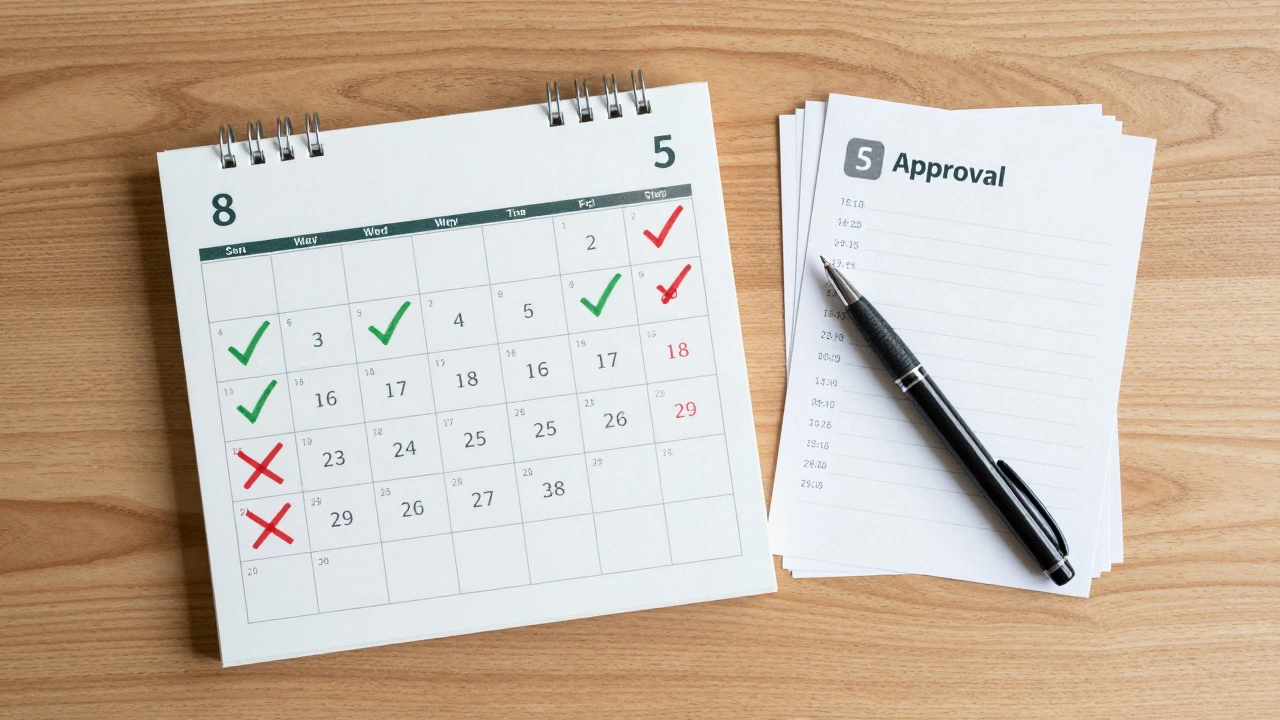
Pro tip: Schedule your ads for weekdays
Here’s something no one tells you: ad approvals slow down on weekends. Especially Friday nights through Sunday. If you submit your ad on a Thursday afternoon, it’s likely reviewed on Friday. Submit on a Saturday morning? It won’t be touched until Monday. Plan ahead. Launch your campaigns early in the week. You’ll get faster feedback and more time to tweak before your campaign starts.
Final reality check
There’s no magic trick. No shortcut. No secret code. If your ad is clean, compliant, and matches your landing page, it will get approved - eventually. The system isn’t broken. It’s just cautious. And for good reason. Bad ads hurt users. They hurt businesses. They hurt trust.
So don’t panic. Don’t spam support. Don’t re-upload. Just wait. Check the feedback. Fix what’s wrong. Then try again. Most ads that get rejected once get approved on the second try - if you listen to the system.
And if you’re promoting something in Paris - whether it’s a boutique, a tour, or a service - make sure your ad says what it means. No fluff. No tricks. Just clarity. That’s what gets approved. That’s what works.
And yes - if you’re searching for something specific in Paris, you might come across escortvparis. But that’s not the path most businesses should take. Stick to clean, honest, compliant ads. They last longer. They build trust. And they actually convert.